A Lounge Chair Built From Broken-Down Pallets
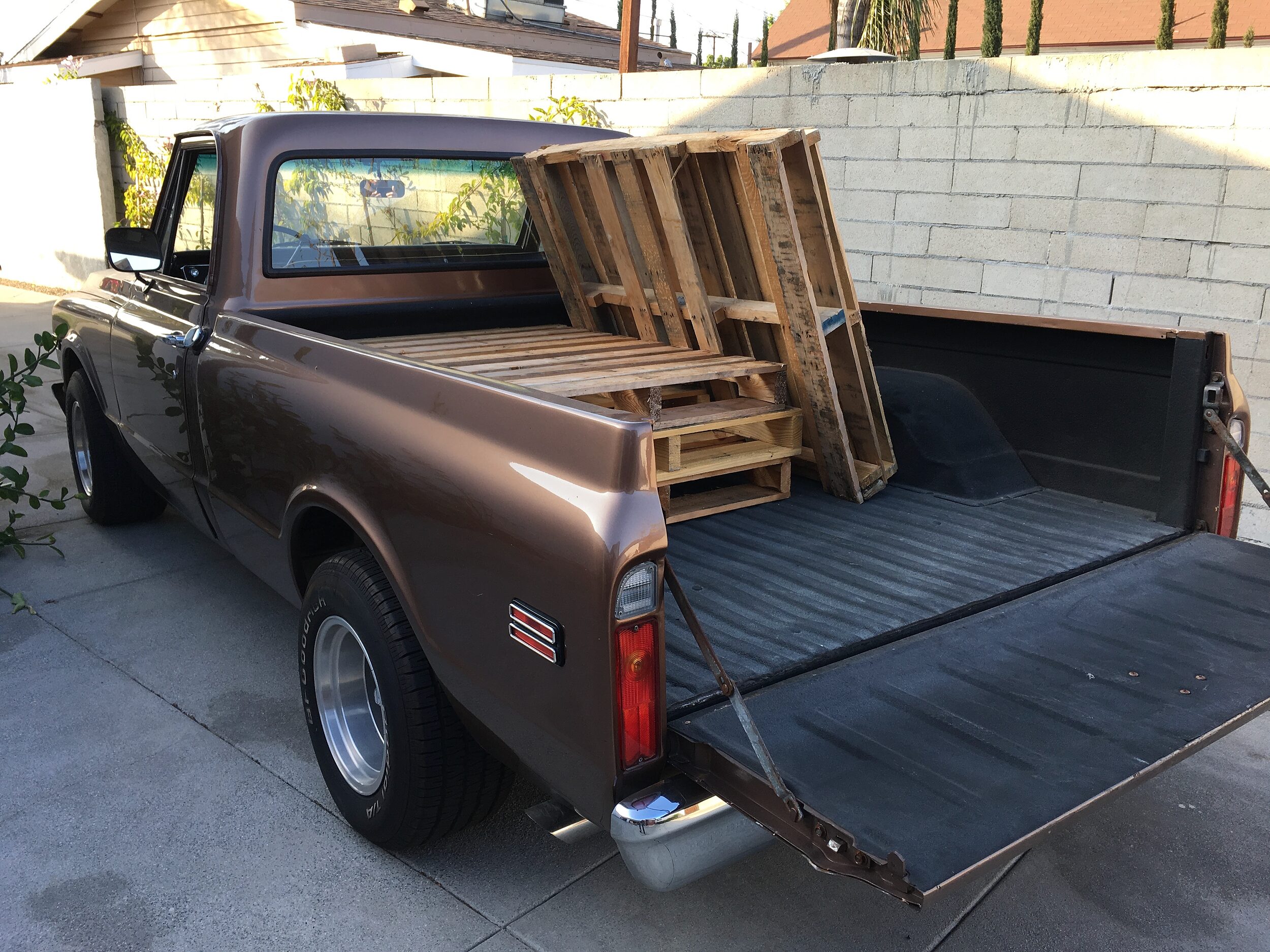
This one started as a stack of pallets in the bed of the truck. By the time it was done, it was a low-slung outdoor lounge chair: the kind you sit back into rather than up on, with a reclined backrest and a seat that sits close to the ground. A few design blogs have been running pieces this year arguing that raw pallet-look patio furniture is starting to look dated. Fair enough, but that critique is really aimed at furniture that still looks like a pallet: exposed stringers, unfinished gray wood, the whole stacked look. This build goes the other direction. Every board here came off a torn-down pallet, but by the time it’s reassembled and stained, none of it reads as “pallet furniture” at a glance. It reads as a chair.
Finished Project Overview
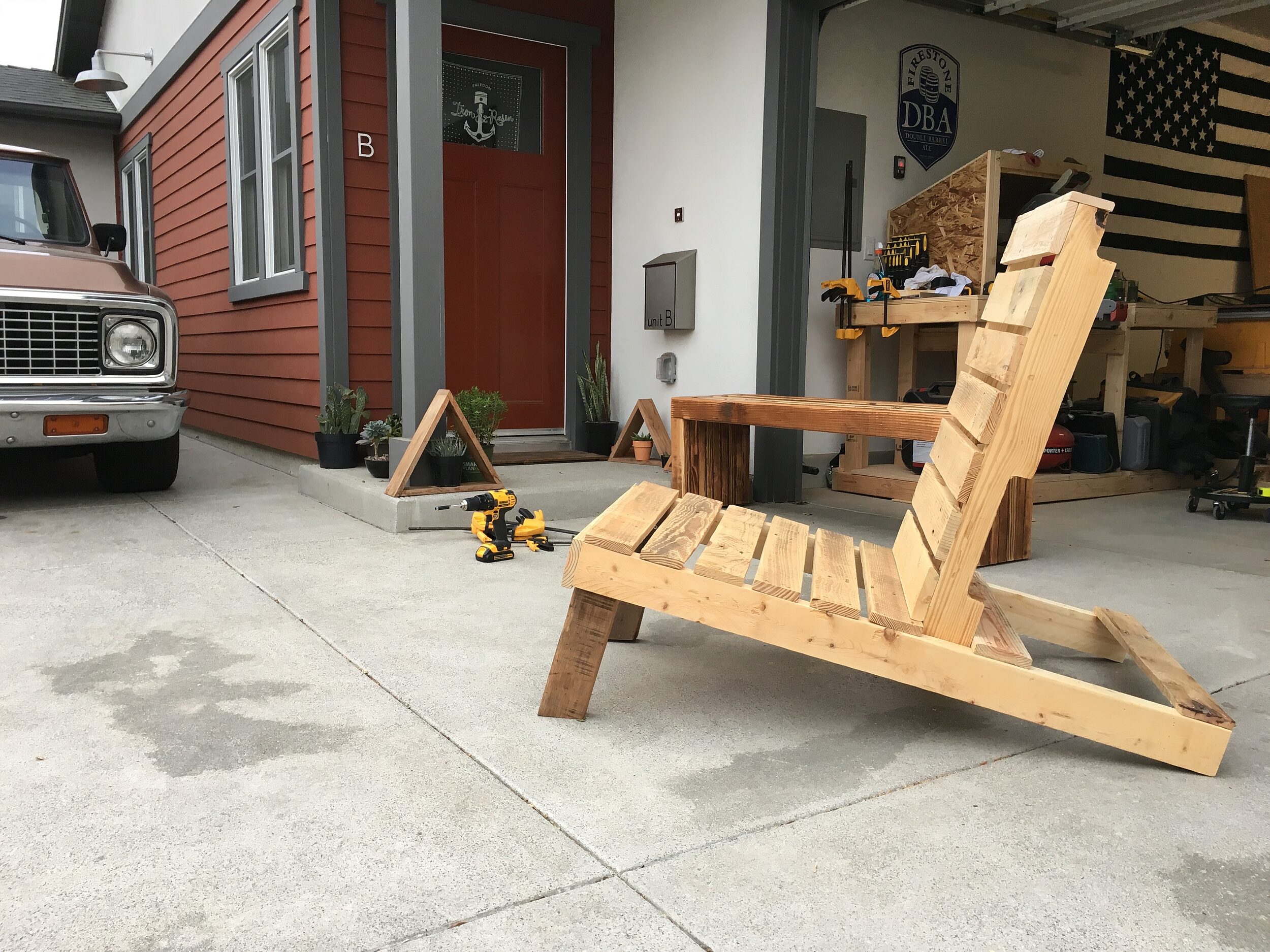
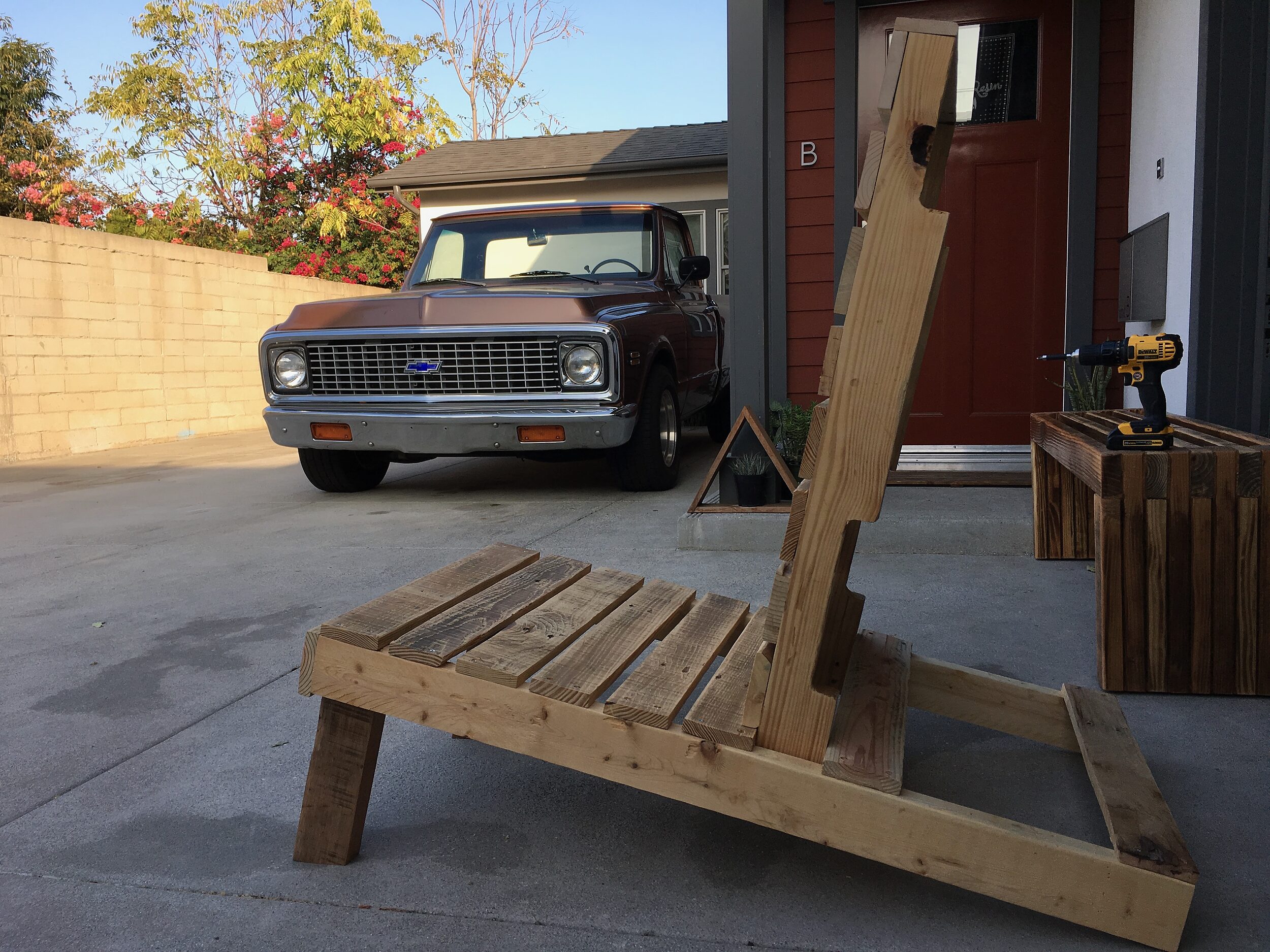
The finished chair is a single-seat outdoor lounger with a low, angled leg frame, a slatted seat, and a reclined slatted backrest, closer in feel to a beach or deck lounger than a formal patio chair. In its raw-wood state, the frame pieces (the long angled back legs and side rails) were noticeably darker and more weathered-looking than the newer pine seat and backrest slats, a visible reminder that this really is built from mixed reclaimed lumber, not a matched set of fresh boards. After staining, that contrast is gone: the whole chair reads as one warm, amber-toned piece.

Dimensions & Specifications
It’s a single-person lounge chair, low to the ground, with a reclined (not upright) backrest angle set by long diagonal back legs, and a seat depth generous enough to sit well back in.
Materials
- Reclaimed pallet lumber, sourced from at least two full pallets, hauled home in the bed of a classic Chevrolet C10 pickup, then broken down board by board in the garage. The frame pieces (angled back legs, side rails) are visibly older and darker than the slats, suggesting they came from a more weathered pallet or were set aside specifically for the structural frame.
- Newer pine boards for the seat and backrest slats: lighter, cleaner-grained pine, newer than the frame pieces.
- A wood stain/finish, used to bring the finished chair to its final amber tone.
Tools
Tools: a corded circular saw, a corded reciprocating saw (for breaking pallets apart without splitting the boards), a cordless drill/driver, a claw hammer, and a tape measure. A paintbrush is visible for applying the finish by hand rather than spraying.
Design Considerations
The chair takes its cue from beach and deck loungers rather than a traditional upright patio chair. The seat sits low, and the backrest leans back at a relaxed angle rather than standing near-vertical like a dining or porch chair. That angle is set structurally by long diagonal back legs rather than a separate recline mechanism, which keeps the design simple: no hinges, no adjustable angle, just a fixed frame cut to the angle I wanted.
The most interesting design decision is the deliberate mixed-material approach: darker, more weathered reclaimed boards for the structural frame, and newer pine for the slats that take the most direct wear and weather exposure (the seat and backrest surfaces). Staining the whole chair afterward unifies the two into one consistent color rather than leaving a visible two-tone patchwork.
Build Process
Sourcing and Breaking Down the Pallets
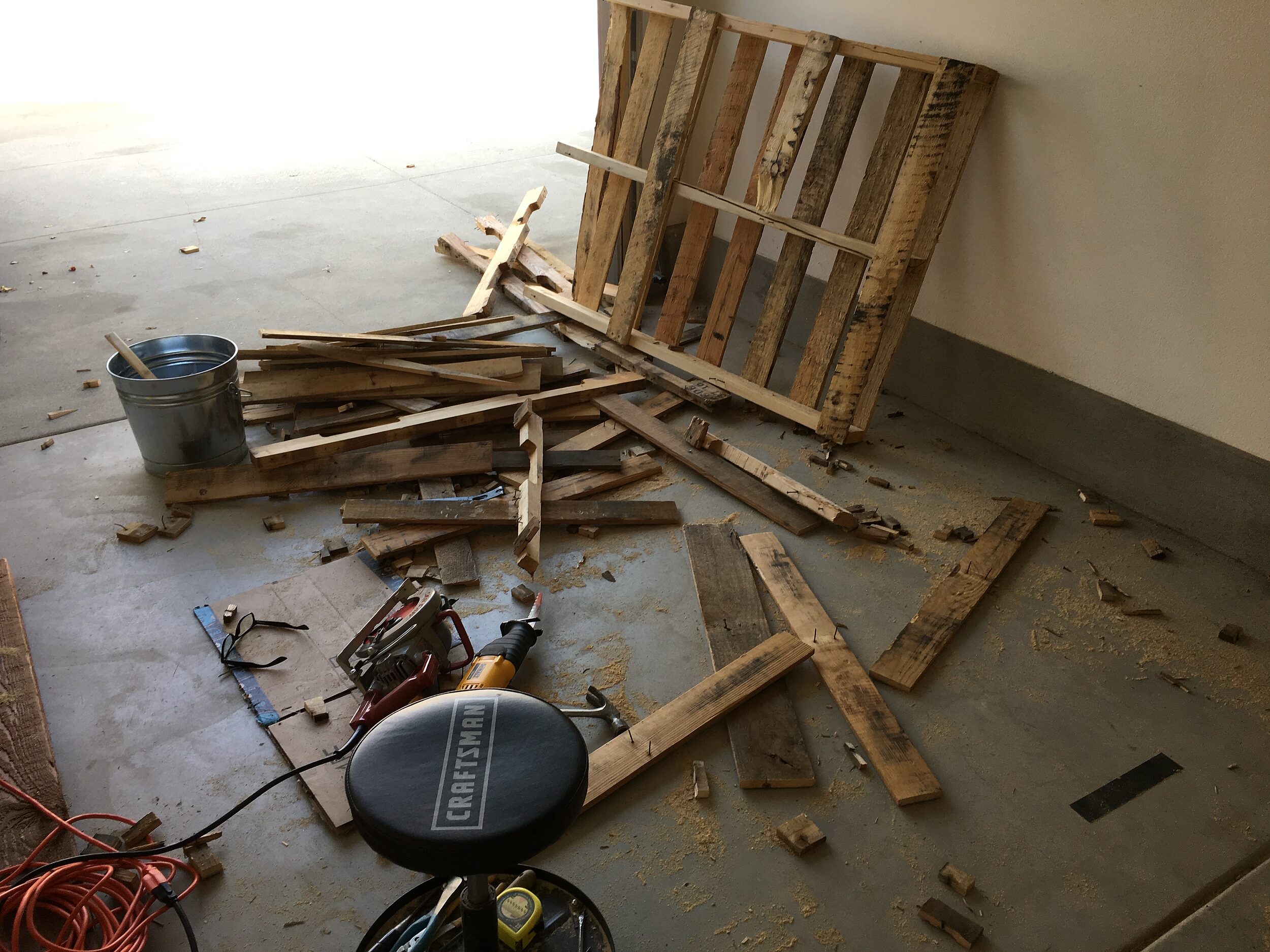
The lumber started as whole pallets, hauled home in the bed of the truck. Back in the garage, they were broken apart board by board with a reciprocating saw, the faster and less splinter-prone way to separate pallet deck boards from their stringers without a pry bar fight. What’s left after teardown is a scrap pile of boards in a range of lengths and conditions, some still trailing bent nails, sorted through for the pieces straight and long enough to use.
Assembling the Frame and Slats
Here it is all put together in raw wood, shot in a few different spots around the garage and driveway (day and night) before finishing.
Staining and Finishing
The last stage brought the chair from raw, mixed-tone wood to a single warm amber finish, applied by brush over a sheet of cardboard on the driveway. It also evened out the color mismatch between the reclaimed frame and the new slats.
Finished Project Gallery
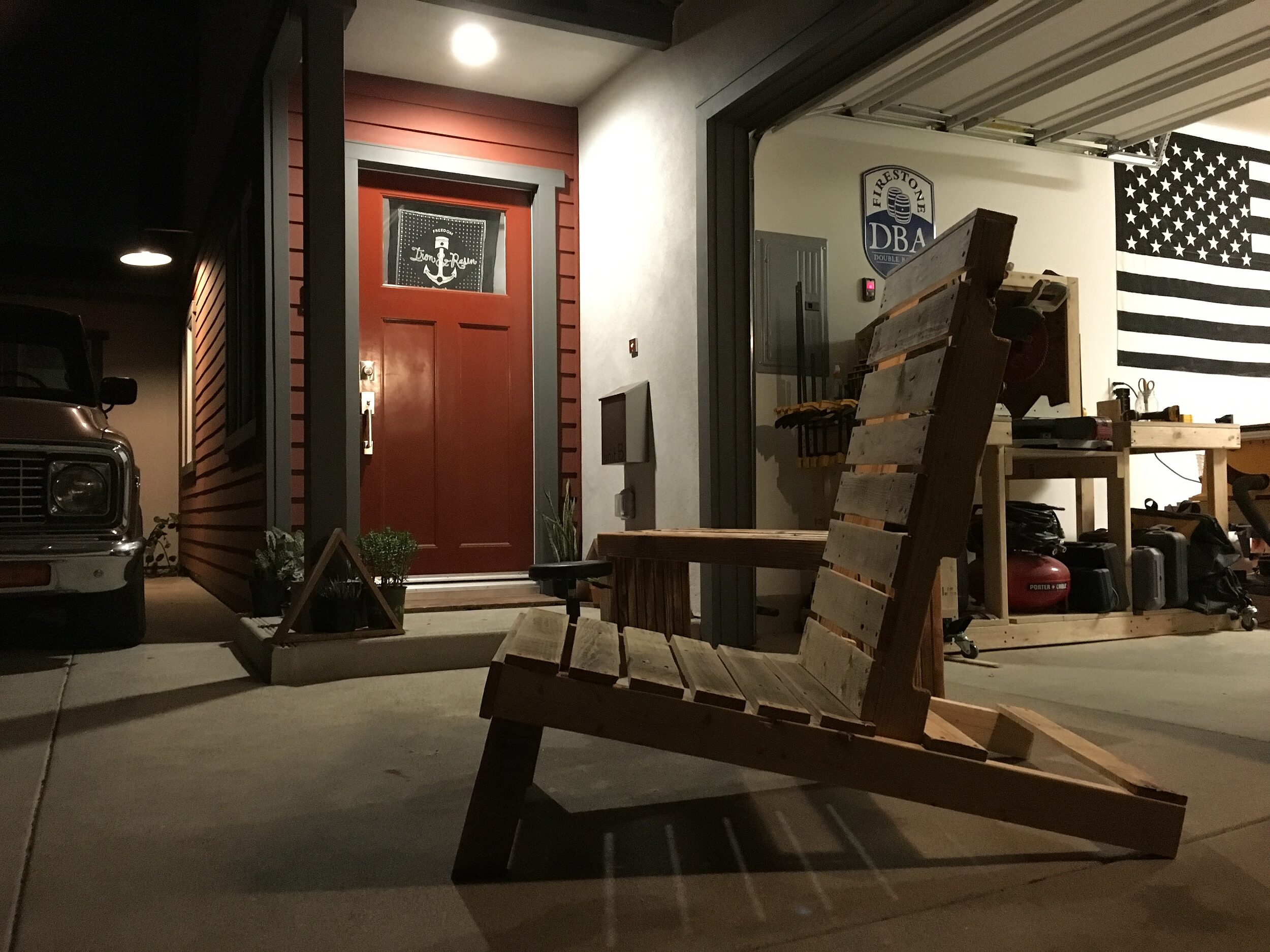
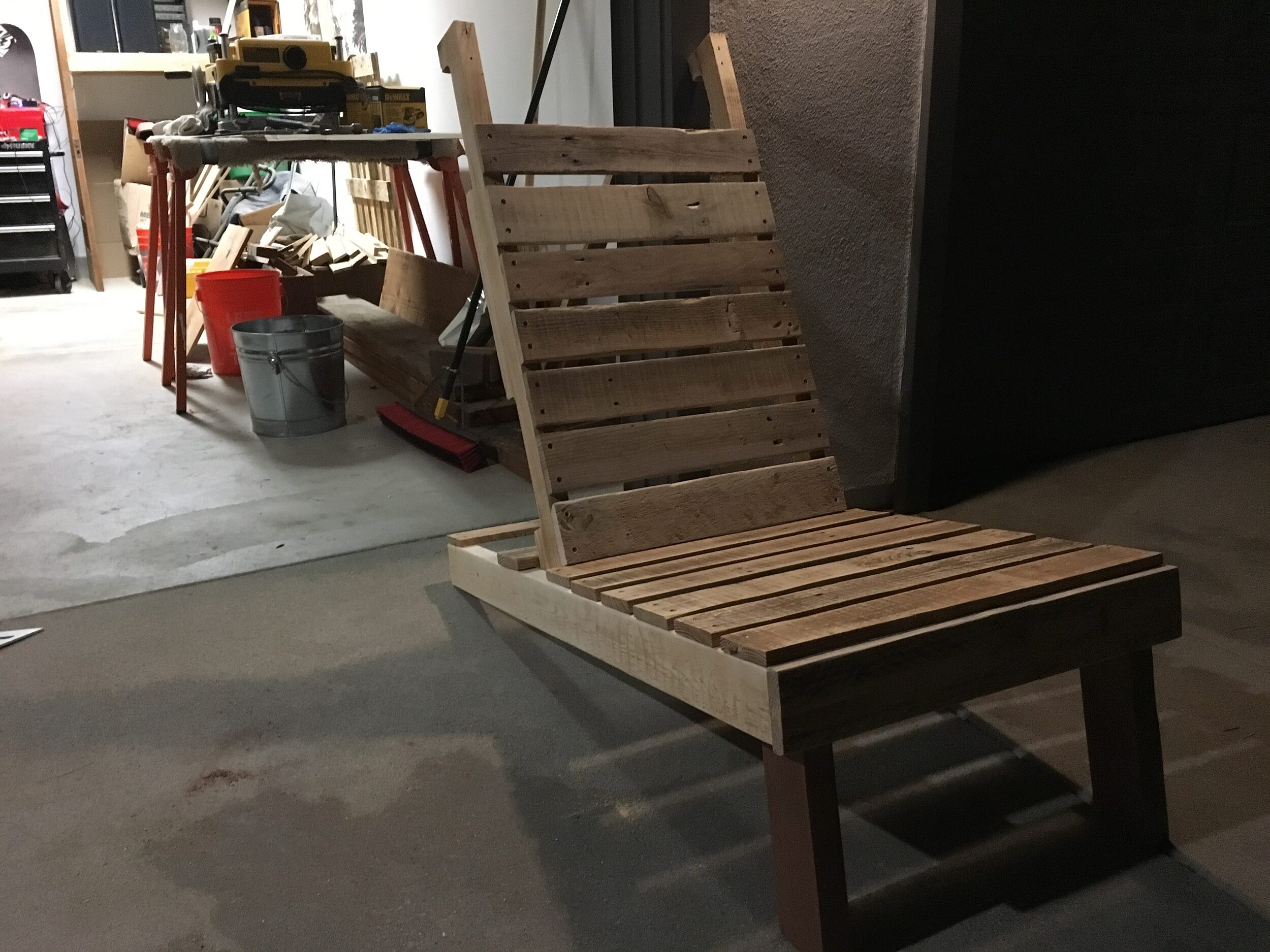
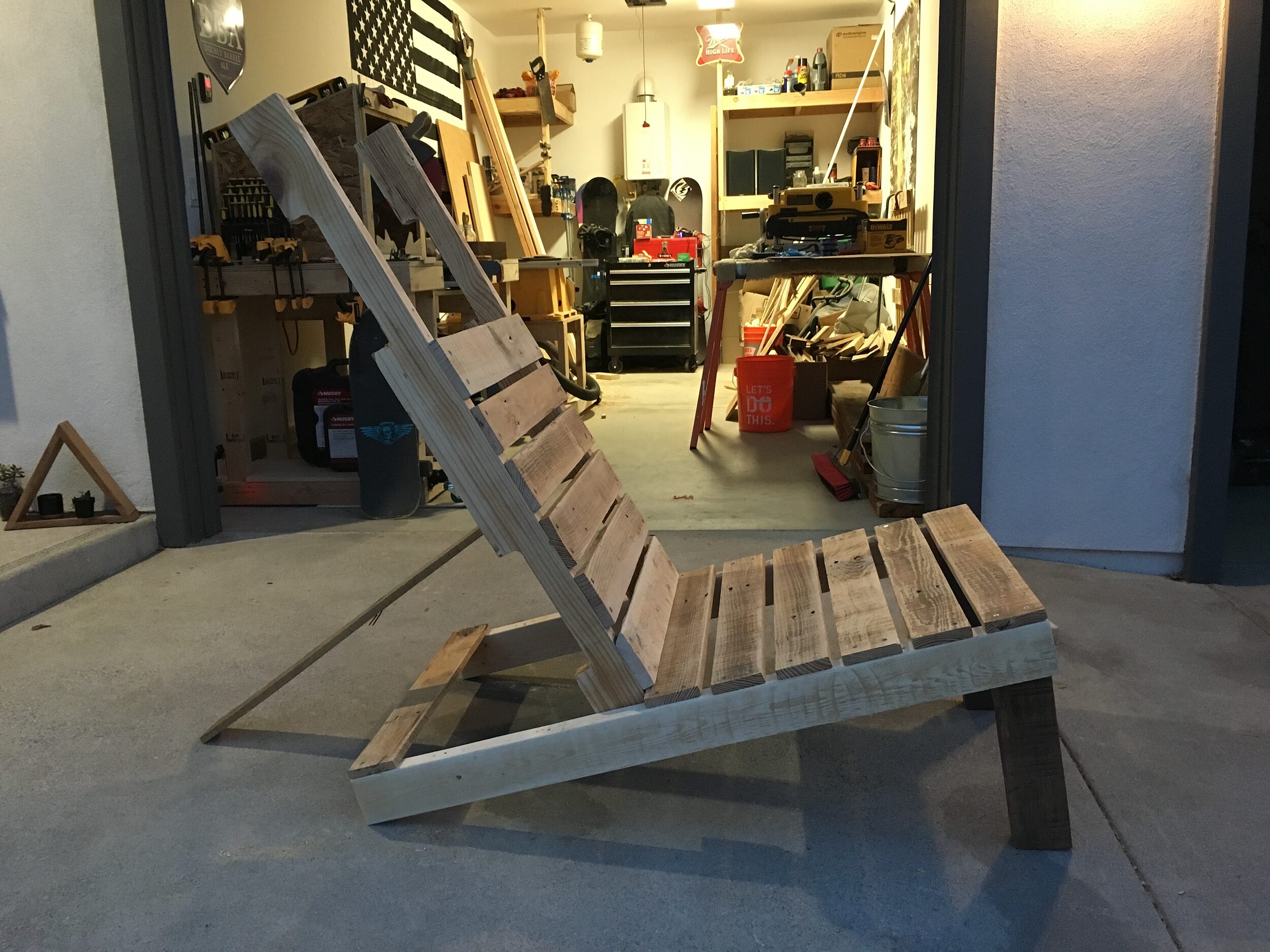
FAQ
Is pallet wood actually safe to reuse for furniture?
As a general rule, pallets are commonly marked with a stamp indicating how they were treated: “HT” means heat-treated, which is considered fine to reuse for furniture, while “MB” means fumigated with methyl bromide, a chemical treatment generally recommended against for furniture that people will sit on or handle regularly. Checking for that stamp before breaking a pallet down is standard advice across pallet-furniture build guides (Home Grail).
Does pallet furniture look outdated in 2026?
Some 2026 design coverage has specifically called out raw, unfinished pallet-look furniture (exposed slats, visible stringers, no finish) as a dated look for a patio (Hunker). That’s a fair critique of furniture that still visibly reads as “a pallet.” Reused pallet lumber broken down into individual boards, reassembled into an actual chair shape, and finished with a stain, like this one, doesn’t fall into that same visual category, even though the raw material is identical.